
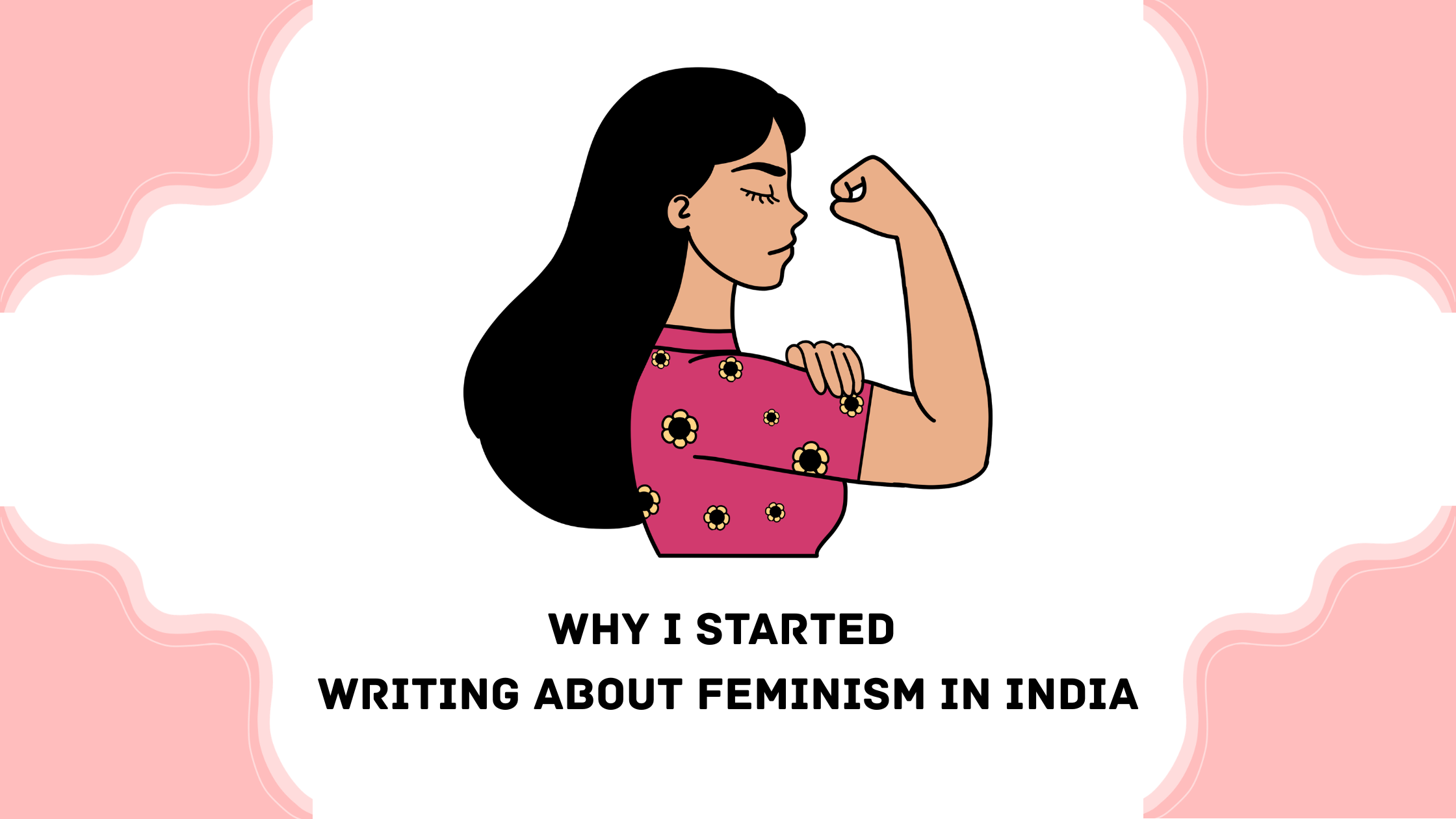
People ask me why I started writing about feminism. They expect an answer about injustice witnessed, about anger directed outward, about a cause discovered. The truth is smaller and harder than that. It begins with a little girl in a boys’ shirt who thought she had escaped being a woman — and ends with that same girl, all grown up, realising she never had a choice in the matter to begin with.
My parents were telling our relatives that I was their “son”, and then in the same breath they would add: “We don’t differentiate between genders. Having a son or a daughter is the same to us”. It was true, no doubt. They loved me like anything in the world. Looking up at them with my little eyes, I stood proud at the thought of being compared to a boy even after being born a girl. My boy-cut hair flickered in the wind, as I slipped my hands into the pockets of my pants—paired, as always, with a shirt I had chosen for myself from the boys’ section. I enjoyed being “superior” to those other girls—the ones in frocks, with ponytails on their heads, a little tint of their mothers’ lipstick on their cheeks and bangles of every colour jangling at their wrists. Pathetic, weak little beings, I thought. I loathed them. I was a boy, they were not.
The masculinisation of Indian girls, happens far earlier than we imagine. There is no stage at which a preventive measure seems possible, because the conditioning begins before the girl herself exists. The foremost concern of the average Indian family is the sex of the child— not the health of the mother, not the health of the child itself. In a country like ours, “a disabled son is considered better than a fully-abled daughter”. What can you expect from a world built on a belief like that?
There are still millions of families in India who still hold this view—and who, as a result, keep bringing girl after girl into this world until they finally beget a boy. It is a comfortable lie to believe that times have changed, that thought processes have reformed themselves. Poverty, illiteracy and social conditioning bring out the worst beliefs like these. The situation doesn’t seem to improve— though at the surface, there are small, visible shifts. And it is precisely at this surface, that society raises its daughters: teaching them to loathe their own kind, so that the structure underneath never has to be questioned.
When I went out into the world, people readily read me as different from “other girls”. I liked it. I was not one of them. Good. They used to say things like” Oh! she must be studious—she’s not into the stuff other girls are into”, and “she dresses exactly like a boy; she’s a son to her parents, they don’t even miss not having had one.”
I received these as compliments. I didn’t understand that every word of praise directed at me was a quiet verdict passed against every other girl.
My mother is, and always was, a simple soul. Maltreated, harassed, oppressed, subjugated, silenced — she was all of these things. And I, her daughter, started to despise her for it. I despised who she was and what I believed she had allowed herself to become. I despised what she tolerated. And so, by extension, I despised them — all those soft, quiet, enduring women who reminded me of her. I did not yet know that what I was despising was not weakness. It was a woman doing the only things she had ever been given permission to do.
Time went on. I was a teenager, brimming with hormones and certainty. My own masculinity made me gravitate toward boys. I took pride in it — I could understand them, knew them like no other girl could. I was their buddy. They too thought I was different from them. I believed they were superior, and that I was one of them — which made me superior too, and the girls, by extension, inferior. Playing their silly games. Doing their silly talk. While I spoke about cars, planes, money — you know, all the important things.
This is how you plot women against women.
It might seem like a small thing. But this is precisely how patriarchy operates — it uses the masculine girl as an instrument against femininity itself. It makes femininity seem weak. It makes it seem foolish. It makes it seem like a limitation, a deficiency, something closer to a disease than a way of being. And the girls who were used as that instrument never even knew they were holding it.
On the verge of womanhood, I stand here — betrayed by the same masculinity I spent my whole life nurturing. The same masculinity I took solace in made me realise, eventually, that I was never truly its own. It never belonged to me either. And so here I am: with the rights of the women I once loathed, with their restrictions, with their harassment, with their diminishment. The same masculinity that I believed would protect me has left me stranded — now that I am a woman, it says it wants nothing to do with me. I gave it everything. I loathed my own kind for it. And look where it has brought me — to suffer the same torments, the same disrespect, the same harassment that has always been the inheritance of the women I spent my whole life refusing to become.
This fight, I have realised, I must fight without the arms of masculinity by my side. It now stands against me. I have to find strength in my softness.
But wait — where is it? I must have shoved it somewhere, to protect myself from the world. I realise now that it was what protected my heart all along. I have to find my compassion — I think I lost it somewhere along the way to womanhood. My love. My silliness. My strength. My power. My resilience. My care. My empathy. My gentleness. My vulnerability. Oh, I have so much — I must have left it all somewhere. I need to find it before I leave for the next.
As a woman now, writing this tale, I am wearing a T-shirt bought from the Men’s section. My hair cut short–I hate it when long strands escape their place and reach for my face, which I keep devoid of any colour. I have chewed my nails down to the bloody brink and I type this story of myself, and millions and millions of little girls in India whose femininity is offered as a sacrifice to a demon called “Internalised Patriarchy”. The demon sits here, looking me in the eyes. I have sold my soul to it. I had no choice. It compels me to do to others what it did to me.
And I say—No. I like the pathetic, little girls.
© Wanee Writes, 2026. All rights reserved.
This blog was written from a place of deep conviction. If it moved you, share it with credit.